
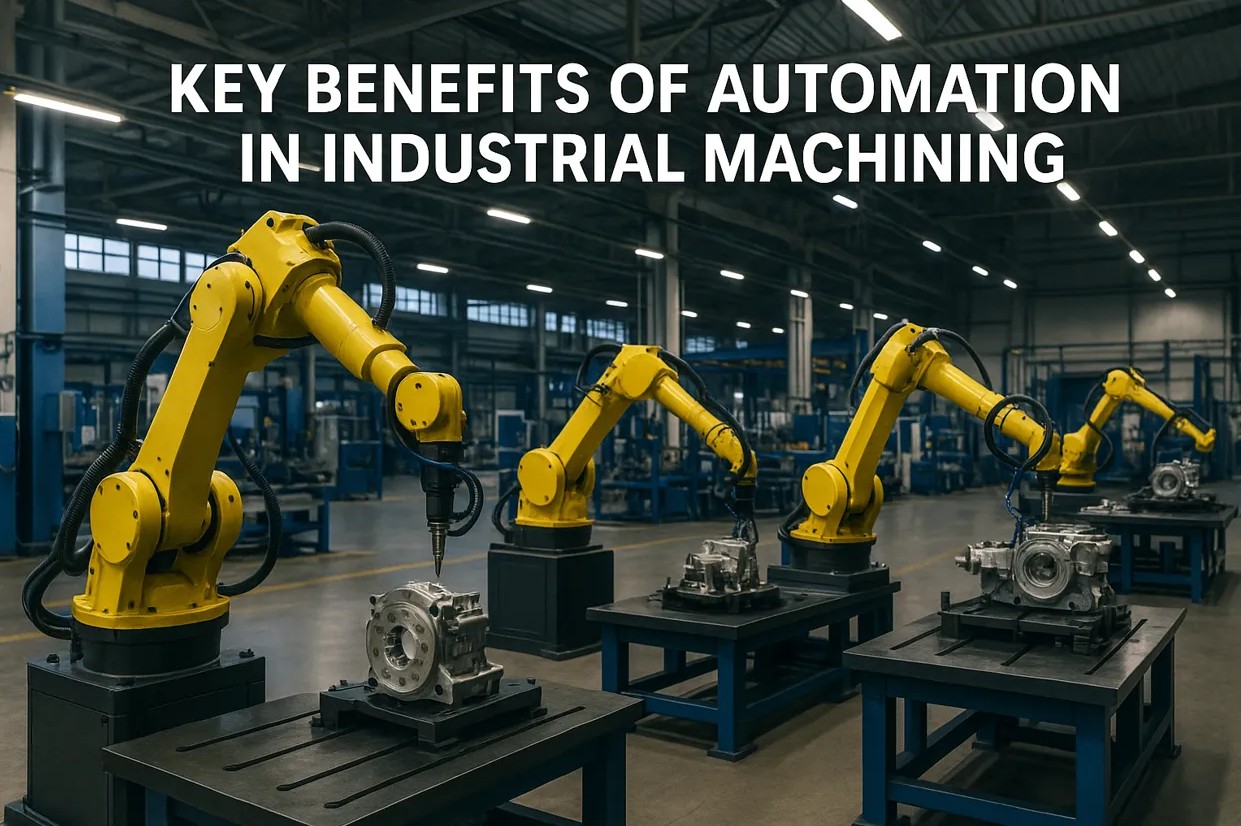
Automation in machining has become a vital element in today’s rapidly evolving industrial landscape, operating as a strategic necessity for manufacturers striving to sustain competitiveness, reduce operational costs, and, more importantly, meet the increasing demands of specific and sensitive production standards.
Automation in machining is now playing a leading role at the forefront of the fourth wave of the industrial revolution, marked by smart factories, interconnected systems, and data-driven operations. In this condition, automation in machining has been capable of providing outstanding and efficient progress, ensuring quality and consistency.
In this article, we will explore the benefits and barriers that automation in industrial machining is facing. This guide helps companies and manufacturers weigh the benefits and the barriers, including capital investment, labor optimization, and technical complexity.
Why Automation in Industrial Machining Matters More Than Ever
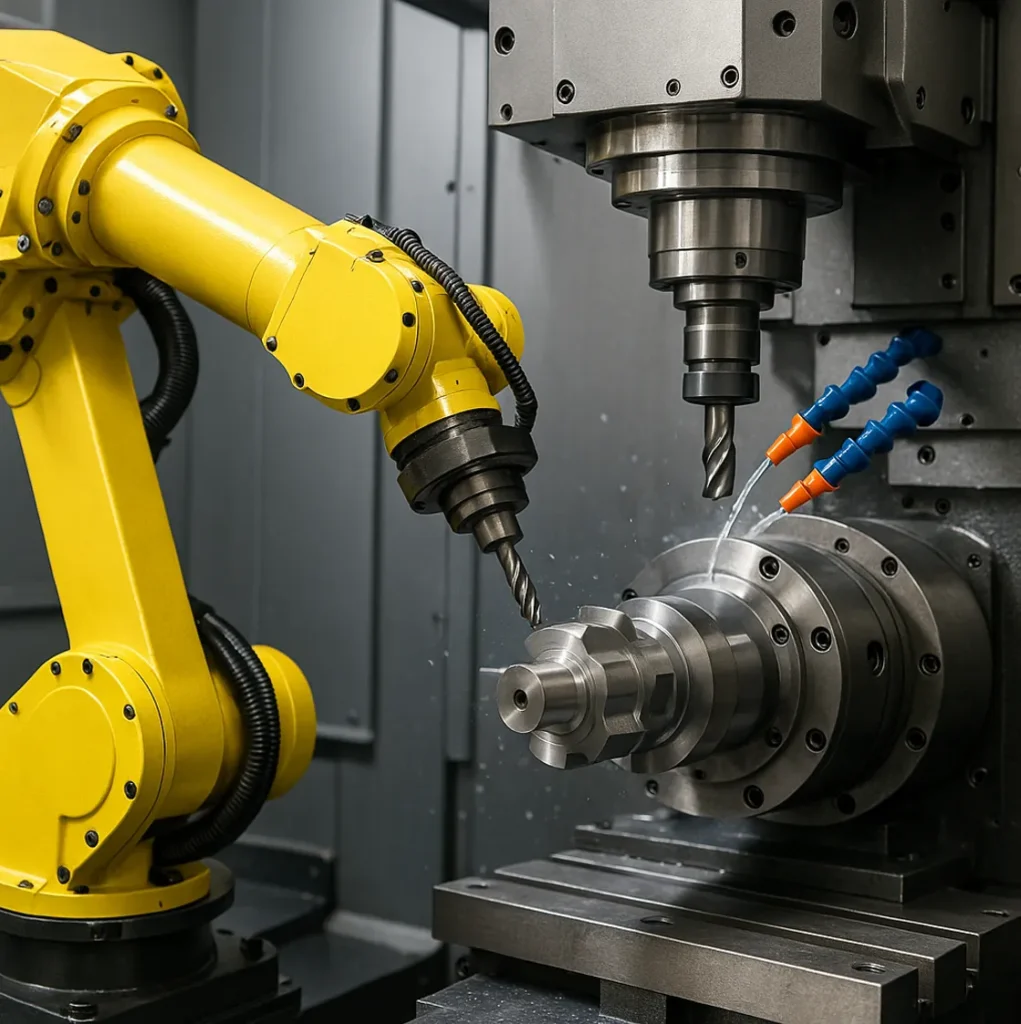
In simple terms, industrial machining automation utilizes computerized systems, including CNC machines, robotic arms, and programmable logic controllers (PLCs), to minimize human intervention in manufacturing tasks such as milling, drilling, grinding, and turning. These technologies are designed to offer remarkable precision, speed, and consistency, which are difficult to achieve with manual methods or human–made procedures.
In the past, machining was primarily labor-intensive, with a high potential for errors and fatigue. However, automation is now able to eliminate these restrictions by enabling:
- Micron-level accuracy and reliability
- Repeatable high-speed production
- 24/7 operation without rest
Some of the most vital industries, such as aerospace, automotive, and medical manufacturing, are now utilizing automation to enhance outcomes, meet stringent quality standards, and make rapid adjustments to accommodate small-batch orders.
In today’s market, automation is no longer a choice but an essential part of production, enabling fast and responsive operations with minimal delay and expense. Not only is it helpful, but it is also efficient and crucial for staying competitive. Regardless of the type of business or industry, automation in industrial machining is not an option to be overlooked.
Key Benefits of Automation in Industrial Machining
Now, let’s explore why automation is desirable and beneficial. The implementation of automation in industrial machining delivers a wide range of tangible benefits that extend beyond fast and convenient production. Some of these advantages that make it so helpful include:
- Enhanced Productivity: Unlike human-based production, automated systems don’t get tired or frustrated, which means they can produce continuously 24 hours a day, 7 days a week without breaks or pauses.
This is a considerable benefit as it reduces time and energy and decreases human activity. This uninterrupted operation enables companies to meet high-volume demands while achieving greater reliability with fewer errors.
- Operational Efficiency: By reducing material waste and usage, automation in industrial machining enhances efficiency and sustainability through the implementation of detailed standards and precise control over machining variables, such as cutting paths, feed rates, and spindle speeds.
All of these variables are highly consistent and measured with specific pre-programmed processes.
- Labor Optimization: Some may think that automation eliminates jobs, but it enables the high-skilled workforce to take on more valuable strategic roles. Operators’ jobs are elevated to handle high-profile tasks, including problem-solving, creative thinking, management, data interpretation, and analysis.
- Data-Driven Decision-Making: Instead of making decisions on crucial matters such as production, creativity, and workforce operation based solely on experience and regular meetings, automation provides data-driven process planning, utilizing data analysis methods and tools to carefully assess the feedback, shortages, and weaknesses of production and outcomes.
Barriers to Implementing Automation in Industrial Machining
Despite its considerable advantages, automation is not free of errors and mistakes, including:
- Implementing such an intelligent system is costly. Advanced CNC machines, collaborative robots (cobots), and smart integration platforms often require a notable initial capital. This can be challenging and difficult to handle for small to medium-sized enterprises (SMEs).
- Technical complexity is another challenge that involves lots of risks and difficulties. System reconfiguration, which is required at the initial stage of the existing one, is time-consuming and complex for companies and staff. Additionally, custom software development and compatibility testing with legacy systems are also required at this stage, further complicating the processes.
- Fears of workforce displacement or job loss are another issue that can hinder adoption. Although automation in industrial machining inevitably transforms job roles and responsibilities, it doesn’t mean laying off the staff. It simply takes time for them to adapt to new and high-level roles. Most industries are concerned about the amount and process of production during this replacement.
Strategic Planning: How to Approach Automation in Industrial Machining
A well-structured automation strategy helps mitigate risks and maximize return on investment (ROI). Consider the following steps:
- Conduct a Readiness Assessment: Evaluate technical infrastructure, workforce skills, and production needs.
- Initiate with Pilot Projects: Measurable insights with small-scale implementation to minimize risk.
- Usage of Modular Systems: Gradual expansion and more straightforward integration are possible through a scalable set-up.
- Prioritize Training and Communication: Necessary skills are communicated and delivered to the workforce and staff to keep them equipped, informed, and engaged.
Partnering with system integrators or automation consultants can also streamline the process of adopting automation in industrial machining, providing external expertise.
Conclusion: Embracing the Future of Smart Automation in Industrial Machining
The automation of industrial machining is not a trend or a solution to choose. It’s a vital strategy for leading businesses seeking effective, smooth, and less costly production.
Although the automation of industrial machining presents problems and challenges at the initial stages of implementation, with precise planning and a clear vision for the future, any business can effectively adjust to the process.

Leave A Comment